Maritime History of the Fresnel Lens: How Lighthouse Optics Changed Navigation
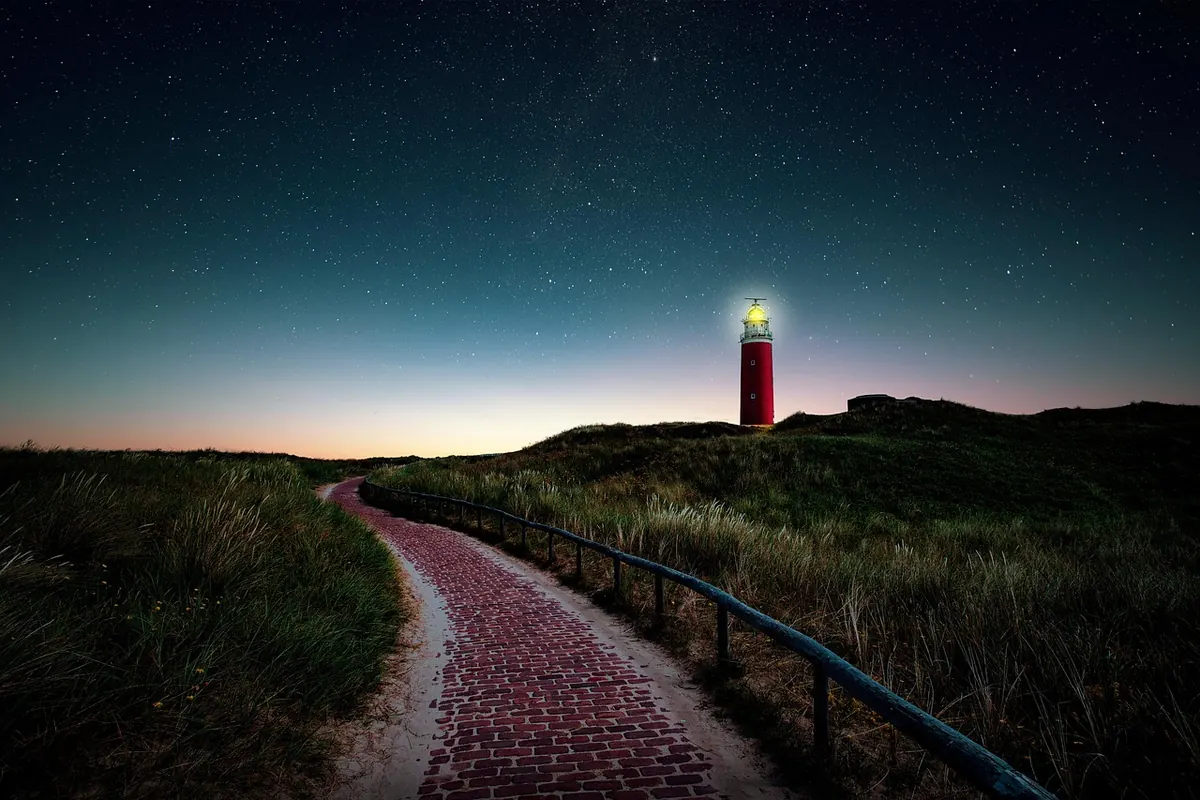
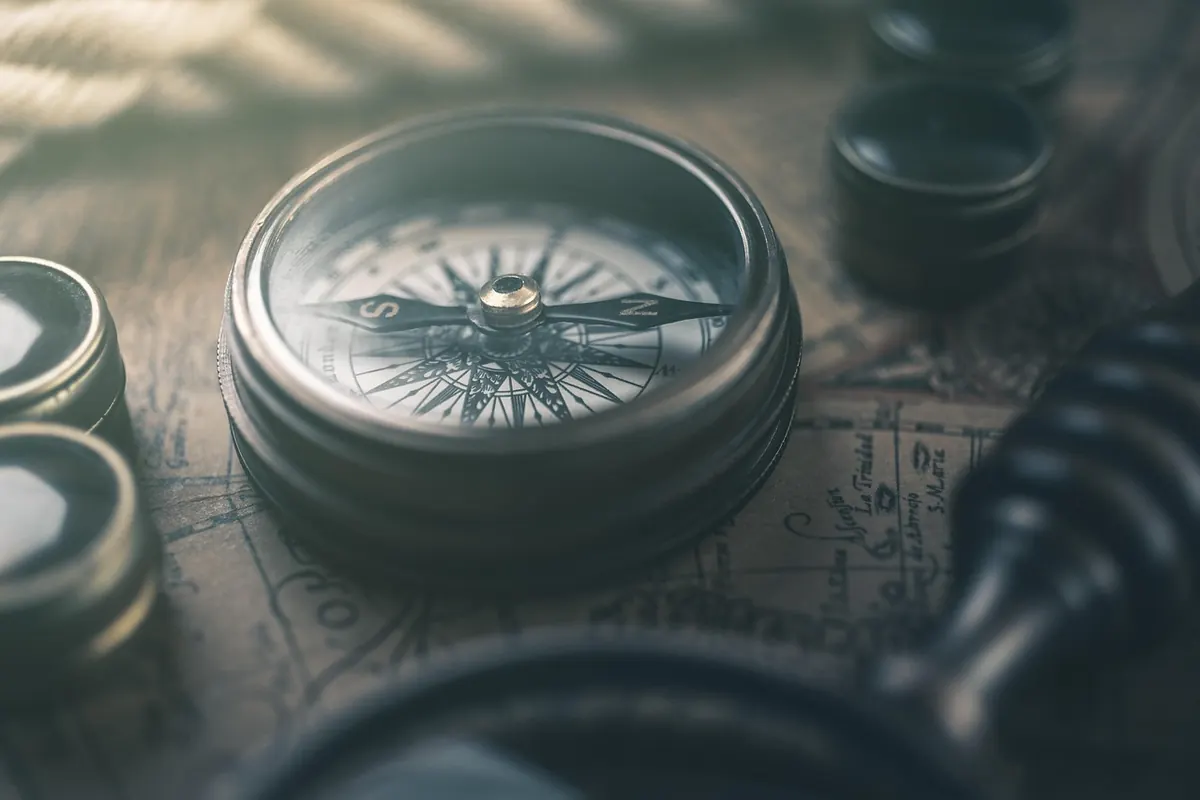
There is a certain patience in watching for a light. You know roughly where the headland should be, you have a bearing in mind, and then the flash arrives — a white pulse, once every ten seconds, sharp enough to read against the smear of coastal glow. Most of what makes that flash legible from fifteen miles offshore was worked out by a French physicist in the 1820s. Augustin-Jean Fresnel did not invent the lighthouse. He invented the reason a lighthouse could be seen.
Before Fresnel: Mirrors, Candles and Wasted Light
For centuries, a coastal light was simply a fire kept burning high up. By the late 1700s the flame had been refined into the Argand burner, with a circular wick and a glass chimney that gave a steadier, brighter and smokeless light than anything before it. The problem was direction. A lamp on its own throws light everywhere, including uselessly out to sea in a hemisphere that never meets a ship.
The standard answer was a parabolic reflector: a dish of silvered copper or polished brass with the flame placed at its focus, so that the light came off the mirror in a broad beam. Whole chandeliers of lamps and reflectors were built, each aimed at a different part of the horizon. They worked, but only up to a point. The flame itself sits in front of the mirror and blocks its centre. To reach further you needed a larger mirror, and a larger mirror demanded a deeper dish, more metal, more weight, and a flame positioned with great precision. Long before you reached the ranges shipmasters wanted, the apparatus became too clumsy to house or to turn.
The Glass Problem
The obvious alternative to a mirror is a lens. Bend the light as it enters the glass and again as it leaves, and you can gather a wide arc of rays and send them off in one direction. Yet a conventional lens of the size needed for a lighthouse is a poor idea. To bend light through a large angle, a lens needs steep curvature, and steep curvature in a single piece means a thick, heavy slab at the centre. Glass is not perfectly transparent: the more of it the light crosses, the more is absorbed and scattered. You end up spending a great deal of money on a heavy block of glass in order to lose a good part of the light inside it. Flaws in the casting would smear the beam further.
Fresnel's Answer: Cut the Lens into Rings
Fresnel's insight was that the bending of light happens at the surfaces of a lens, not in the bulk between them. The glass in the middle of a fat lens does almost nothing except absorb light and add weight. So he removed it. What remains is a series of concentric annular prisms set in a frame, arranged in bands around a central bullseye, each ring carrying the curvature of one zone of the original lens. Every ring collects a slice of the lamp's output and throws it into the same direction as its neighbours, producing one beam from many small pieces of glass.
The outer prisms do their work by total internal reflection rather than straightforward refraction: light entering the glass at a shallow angle bounces off the inner face and is directed forward. Panels above and below the main band bend the stray light back down into the horizon beam. The whole assembly is thin compared with a solid lens, light in weight, and economical with glass. Fresnel presented the idea to the French Academy in 1822, and a lens of his design was in service at Cordouan, at the mouth of the Gironde, by 1823. He died four years later, in his thirties, with the principle already established.
Orders: A Size Class for Every Coast
Lenses were built in standard sizes, called orders, defined by focal length and therefore by the diameter of the beam-forming rings. The biggest, the first order, stands about two and a half metres tall and is a brass-framed structure of many hundreds of glass elements; it was reserved for major landfall and coastal lights. The smallest, the sixth order, is a modest drum of glass suited to harbour entrances and river marks. It is worth understanding what "order" does and does not mean. It is a class of optical size, not a ranking of the place's importance — though in practice the two usually ran together, because a busy headland justified the expense.
- First order: the large coastal and landfall lights, focal length around a metre.
- Second and third order: important coastal lights and major harbour approaches.
- Fourth and fifth order: smaller coastal lights, pier heads, estuary marks.
- Sixth order: harbour and river lights, short range, compact and cheap to run.
Character, Rotation and a Bearing That Tells You Where You Are
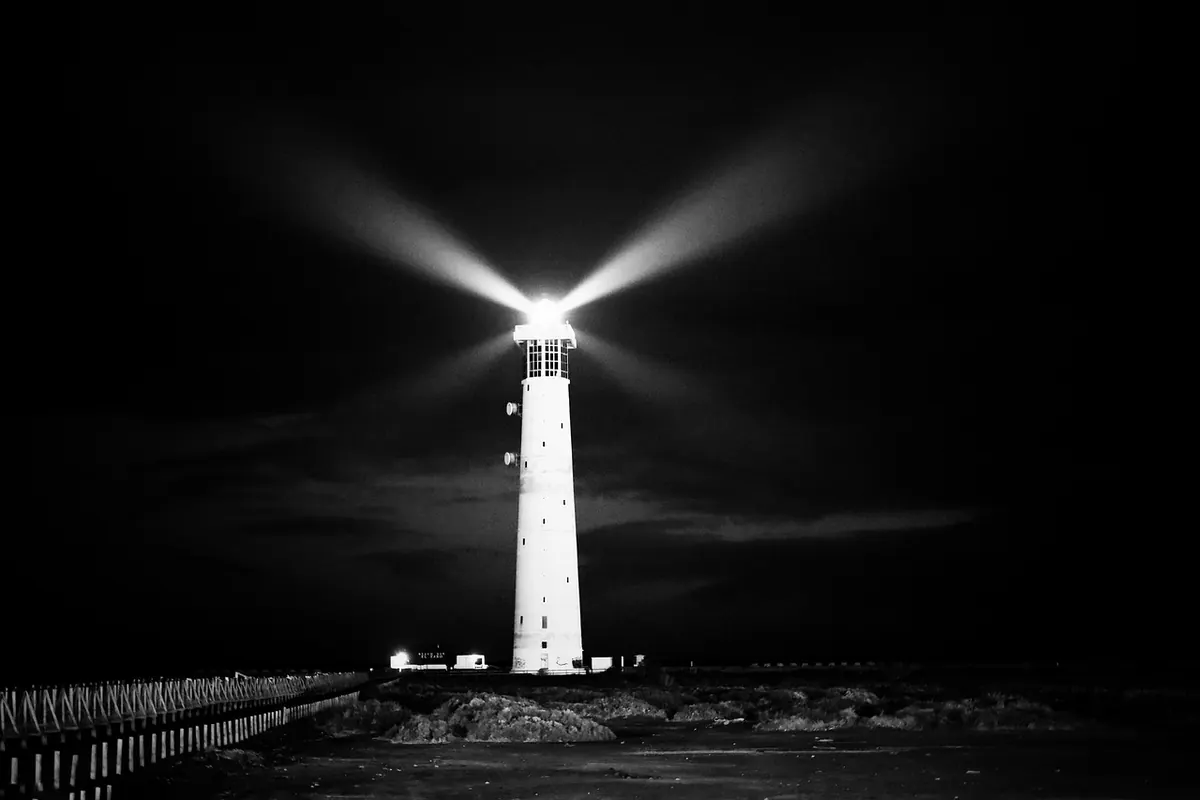
Once a light could be concentrated, it could also be interrupted. Mount the lens on a carriage floated in a bath of mercury to cut friction, drive it with a descending weight and clockwork, and the beam sweeps the horizon. Every few seconds it strikes the observer's eye. Different stations were given different patterns — fixed, flashing, occulting, group flashing, isophase — so that a navigator could time the flashes with a watch and know which light he was looking at before he could see the land. This is the quiet genius of the system: the light stopped being a lamp and became a signal with an identity.
Sectors came next. Slips of coloured glass inserted into parts of the lens tinted the beam red or green over specific bearings, marking a shoal, a wreck or the safe line into a channel. Leading lights were aligned so that two lights in transit kept a vessel in the dredged water. All of it was read from the deck, at night, with a watch, a compass and a chart.
Range: What the Number on the Chart Really Means
Two different limits govern how far a light can be seen. The nominal range is an optical figure, usually quoted for a meteorological visibility of about ten nautical miles. The geographic range is simply the distance at which the light drops below the horizon, given the height of the light and your height of eye. Whichever is shorter wins. On a clear night a tall first-order light may be cut off by the curve of the earth well before its optics run out; from a low cockpit the horizon bites early. In haze the optical limit shrinks fast, and coloured light — red especially — goes before white does. A light may also show its loom above the horizon before the lamp itself is visible.
Making It: Glass, Brass and Patience
The lenses were a manufacturing achievement as much as an optical one. Optical glass had to be melted cleanly and free of striae, then ground and polished zone by zone and set into brass frames that held each prism at its exact angle. Alignment was unforgiving: the burner had to sit at the focus, and the focus was a point, not an area. Keepers trimmed wicks, cleaned glass and watched for anything that shifted the flame a fraction out of place — a beam thrown a degree off might still be bright and still be in the wrong part of the sky. Electric lamps, then automation, ended the keepers' era, but a good number of the old lenses remain in service, and more are preserved ashore in museums where you can walk around them and see the rings for yourself.
A Short Checklist for Reading a Light
Next time a light comes up on the bow, use it as an instrument rather than a comfort.
- Look up the light in the Light List or on the chart before the passage, and note its character and period.
- Time the flashes with a watch; the pattern identifies the station more reliably than brightness does.
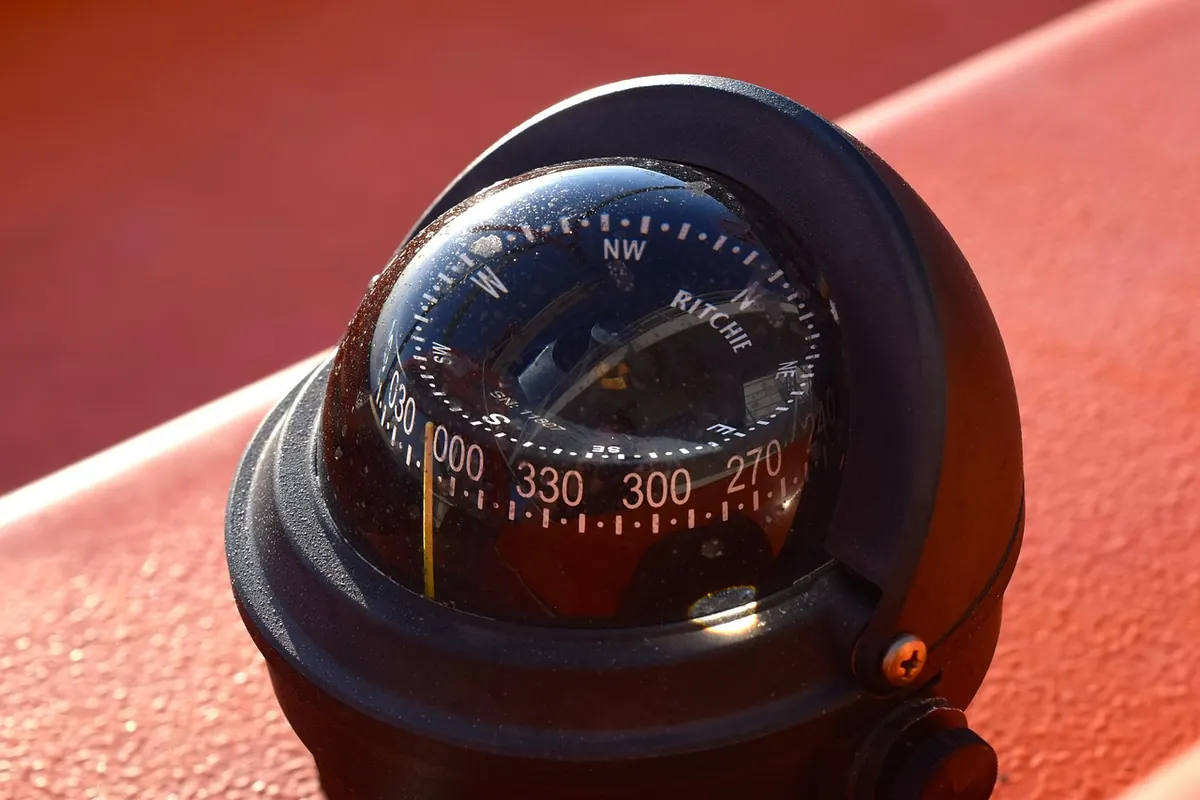
- Take a bearing, wait for the next flash, take another. Two bearings and the run between them fix your position.
- Compare the bearing with the sectors marked on the chart; a red sector is telling you something, not decorating the night.
- Allow for height of eye when you estimate distance — a light seen just above the horizon is closer than it feels.
- Keep the light as one input among several. Radar, soundings and position fixing belong in the same picture.
A lens designed two hundred years ago is still teaching the same lesson: what you see at sea depends on how the light was shaped, and what you make of it depends on how carefully you look.
Photo: Ralf1403 / Pixabay