Lighthouse Flash Patterns Explained: How to Identify a Light at Night
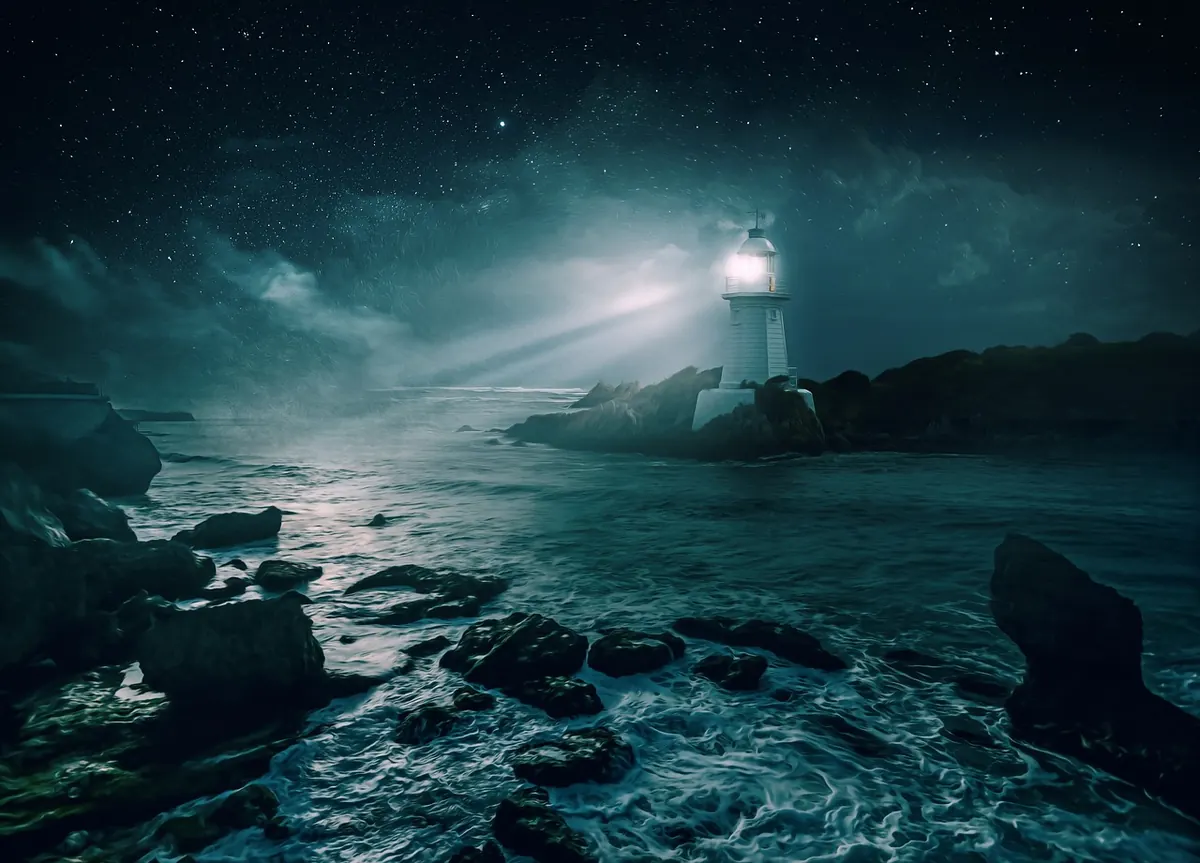
Night navigation rewards the patient. On a dark coast the first instinct is to hunt for the brightest light and steer toward it, which is the wrong order of operations. A lighthouse is not a target to aim at; it is a signature to be read. Its colour, its rhythm and the length of the pause between flashes are printed on the chart in a handful of compact characters, and once you can translate those characters into what your eyes actually see, an unfamiliar coastline stops being a scatter of lights and becomes a set of labelled marks.
Start with the characteristic, not the light
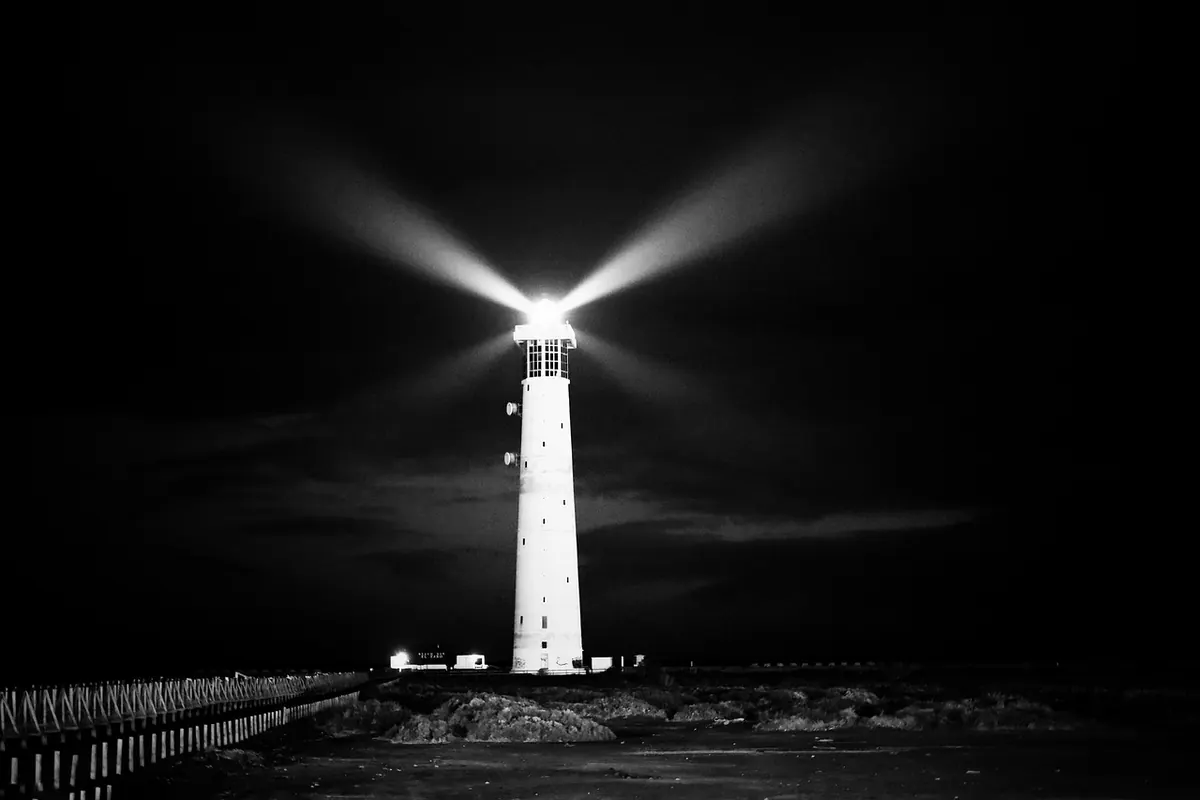
A light's character is the pattern it repeats. The operative word is repeats. Every lighthouse runs a cycle — the period — and everything inside that cycle is deliberate: the duration of the flash, the number of flashes in a group, the gap between groups, the colour. Nothing about it is accidental, and that is precisely what makes it identifiable from several miles offshore.
Charts compress all of this into a label such as Fl(2)WR 10s 32m 20M. Read left to right: a group of two flashes; white and red, meaning the light shows different colours over different bearings; a period of ten seconds; a focal plane 32 metres above mean high water; and a nominal range of 20 nautical miles. That single string tells you what to look for, how long to look, and roughly how far off it should first appear on a clear night.
The abbreviations you will actually meet
Most charted lights use one of a small family of codes. Learn these ten and you can read almost any label you encounter:
- F — Fixed. A steady, unblinking light. Increasingly rare, and easily confused with shore lights and streetlamps.
- Fl — Flashing. The light is on for less time than it is off. A single flash per cycle is written simply as Fl.
- LFl — Long flashing. A single flash lasting two seconds or more, still shorter than the dark that follows it.
- Oc — Occulting. The reverse of flashing: light shows for longer than it hides, so it reads as a steady beam interrupted by brief eclipses.
- Iso — Isophase. Equal periods of light and darkness. Once you have seen it, the symmetry is hard to mistake.
- Q, VQ, UQ — Quick, Very quick, Ultra quick. Rhythms of roughly one flash per second, around two per second, and faster still — too fast to count comfortably.
- Mo — Morse. The flashes spell a letter in Morse code, for example Mo(A).
- Al — Alternating. The light changes colour within the cycle, as in Al Fl WR 10s.
- Group notation — Fl(2), Fl(3), Fl(2+1). Flashes arrive in clusters rather than singly.
- Colour letters — W, R, G, Y. White, red, green, yellow, usually marking sectors.
The period is the part people get wrong
The number after the colour is not the length of one flash. It is the time from the start of one full cycle to the start of the next — first flash of the group to first flash of the following group. Misread it and you can talk yourself into the wrong light while feeling entirely confident about it.
Time it properly. Start a stopwatch on a flash, let the whole cycle run, and stop on the equivalent flash in the next group. Do that three times and divide by three; the average smooths out your reaction time. On a rolling deck this is fiddly, but it is still the most reliable method available without electronics.
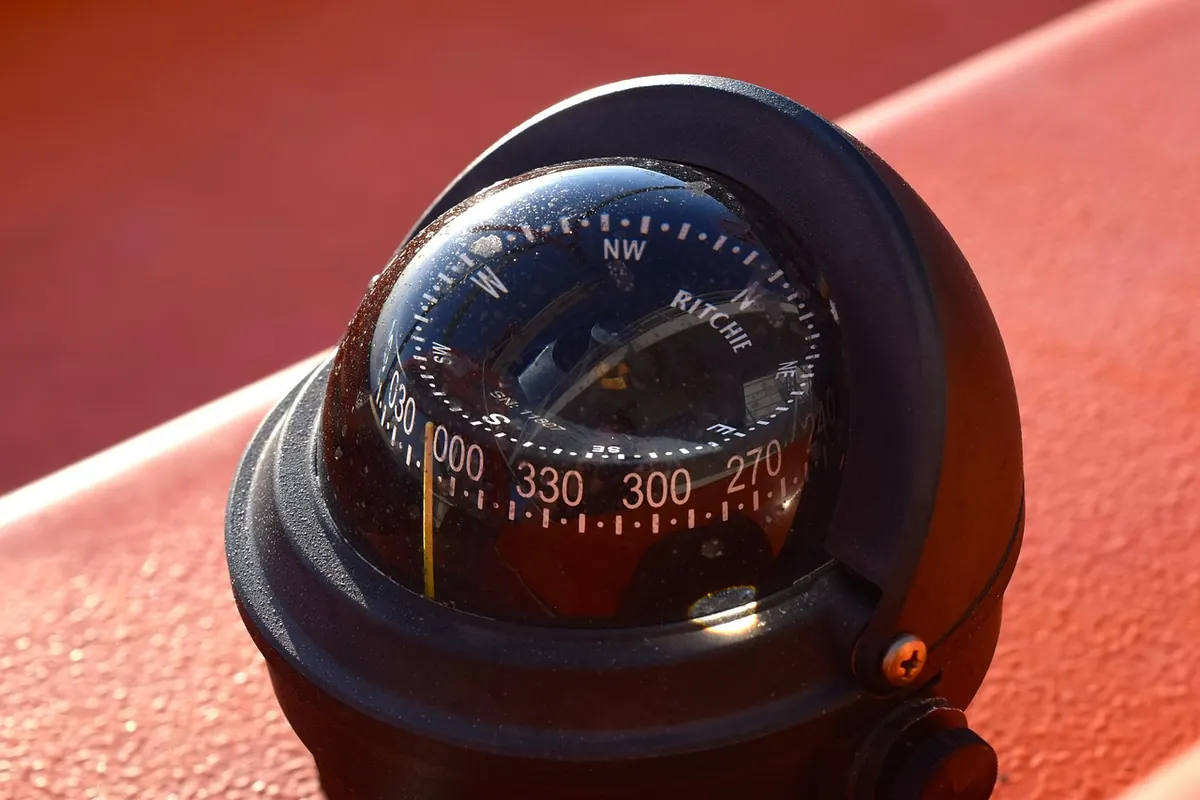
The arithmetic earns its keep at close range. Two lights can carry the same flash count and different periods. Fl(2) 5s and Fl(2) 10s look similar in a quick glance and are unmistakable once timed. If you are carrying a hand-bearing compass, take the bearing at the same moment — the pair of numbers, period and bearing, settles most doubts.
Group flashing and the long gap
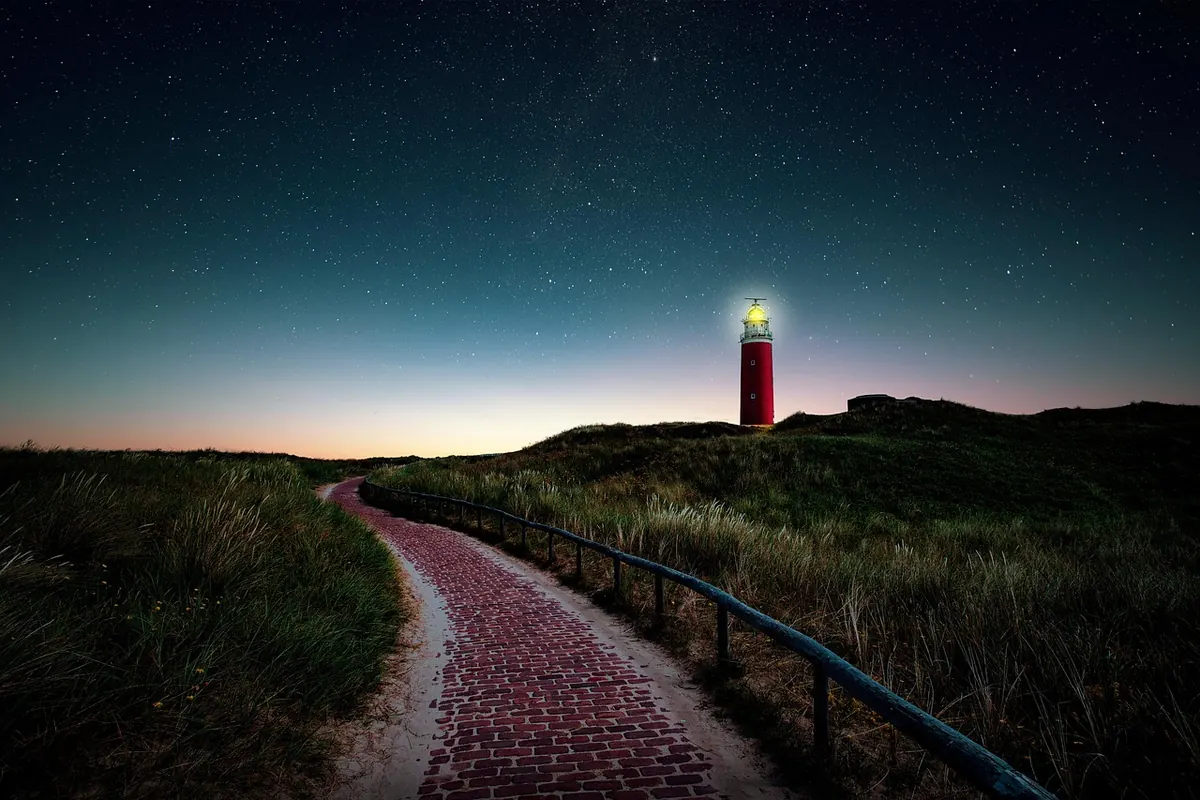
Fl(2) and Fl(3) are the workhorses of coastal navigation, and the giveaway is the uneven spacing. Flashes come in a cluster, then a pause longer than the gaps inside the cluster, then the cluster repeats. Fl(2+1) is a composite group: two flashes close together, a gap, a single flash, then the long rest.
Count from the first flash of a group, not from the moment you happened to look up. If you start counting mid-cluster you will count two where there should be three, and then convince yourself the chart is wrong.
Colour, sectors, and what the arcs are telling you
Many lighthouses show different colours over different bearings. As a rule, the white sector marks the safe approach, while red and green sectors flank it and warn of hazards or mark the edges of the fairway. The boundary between one colour and the next is a bearing, not a decoration. Crossing from white into red means you have drifted off the line, and the light is telling you so before your chart plot confirms it.
Keep alternating lights separate in your mind. A sectored light changes colour as you move across the water; an alternating light changes colour as time passes, from wherever you happen to be watching. Confusing the two produces some genuinely baffling minutes at the chart table.
A method for matching a pattern to the chart
Order matters here. Work through these steps and the identification nearly makes itself:
- Let your eyes adapt. Full dark adaptation takes twenty minutes or more. Dim every screen you can and keep white light off the deck.
- Time before you name. Watch at least two complete cycles with a stopwatch before you decide what you are looking at.
- Note the sequence. Single flash or group, and how many in the group.
- Note the colour, and whether the colour changes with bearing or with time.
- Take a bearing. Two lights can share a flash pattern; a bearing separates them.
- Go to the chart and check the label, position, elevation and range. Is that nominal range plausible for the distance you have run?
- Check the sector boundaries if the light is sectored, and confirm the bearing sits where you expect.
- Log it — time, bearing, pattern — so the next watch can check your reasoning rather than repeat it.
When the light does not match the chart
Sometimes the pattern simply will not fit, and the answer is usually mundane. Haze and rain cut effective range well below the nominal figure; a light that appears late is telling you about visibility, not about your eyesight. Background clutter from shore lights, vehicle headlights and aerobeacons creates phantom flashes. You may be looking at a buoy rather than a lighthouse, or at a harbour light that never made it onto your passage plan.
Occasionally the light itself has changed — converted to solar, altered in character, or temporarily discontinued — and your chart or almanac is out of date. Notices to Mariners exist for exactly this reason. When the pattern refuses to resolve, the correct entry in the log is "unidentified," not a guess with a confident tone.
Before you trust the identification
Three confirmations, every time: a pattern timed across at least two full cycles, a compass bearing, and a range that fits your estimated distance off. If any one of the three disagrees, the light stays unidentified until it doesn't.
The habit that makes all of this easy costs nothing and happens in daylight. Before dark, read the chart, pick the two or three lights you expect to raise on this leg, and write them down with their characteristics on a scrap of paper by the helm. Then, at night, you are not identifying lights at all. You are confirming a short list you already know — which is a far calmer way to spend a watch.
Photo: darksouls1 / Pixabay